Growing IVF Use Creates Expanding Liability Exposure
October 8, 2026
byA new market study projects growing demand for insurance protecting in vitro fertilization clinics as rising treatment volumes expose fertility practices to an 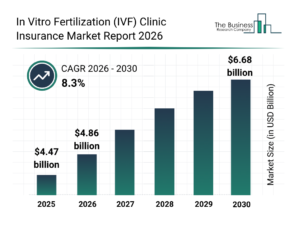 unusual combination of medical malpractice, laboratory, cyber and operational risks.
The research firm attributes recent market growth partly to an increase in medical malpractice claims, a rising number of IVF clinics, expansion of assisted reproductive technology services and greater awareness of risk management. It expects increasing complexity of IVF laboratory operations, demand for cyber liability coverage and development of specialized insurance products to contribute to future growth.
North America represented the largest share of the market in 2025, according to the report, while Asia-Pacific is expected to be its fastest-growing region.
The firm's market estimates should be interpreted cautiously. Its definition of IVF clinic insurance encompasses several forms of coverage and operational risk, and portions of its accompanying market analysis appear to blur insurance protecting fertility clinics against liability with insurance that helps patients pay for fertility treatment.
Still, the underlying exposure identified by the report comes as IVF treatment volume in the United States reaches record levels.
More than 100,000 babies were born through IVF in the U.S. in 2024, the first time the total exceeded that threshold in a single year, according to data released by the Society for Assisted Reproductive Technology. SART-member clinics reported 449,772 IVF treatment cycles and 100,158 babies born through IVF.
Increasing treatment volume also means greater exposure to errors unique to reproductive medicine.
The American Society for Reproductive Medicine has identified loss, damage and misdirection of sperm, eggs and embryos as significant risks in fertility care. Potential events include cryopreservation tank failures, laboratory accidents, misplaced reproductive material and the transfer of an incorrect embryo or use of the wrong sperm.
Cryogenic storage introduces another layer of risk. ASRM guidance identifies possible failures involving storage tanks, liquid-nitrogen monitoring systems and alarms, along with human errors such as mislabeling samples, thawing material belonging to the wrong patient, inadequate inventory records and failure to follow established protocols.
Unlike most individual medical malpractice events, some IVF laboratory failures can expose a practice and its insurers to claims from multiple patients simultaneously.
A 2018 cryogenic tank failure at Pacific Fertility Center in San Francisco endangered thousands of frozen eggs and embryos and generated extensive litigation. In a 2021 bellwether trial involving five patients, a federal jury awarded nearly $15 million and apportioned 90% of the liability to the tank manufacturer and 10% to the fertility center.
The liability questions surrounding reproductive medicine can also extend beyond conventional medical negligence.
In 2024, the Alabama Supreme Court ruled in LePage v. Center for Reproductive Medicine that frozen embryos qualify as children under the state's Wrongful Death of a Minor Act. The case arose after a hospital patient entered an unsecured cryogenic storage area and removed embryos from a storage unit. Several embryos were dropped and destroyed.
Fertility practices also face potential liability over embryo disposition. ASRM recommends that clinics obtain written instructions governing stored embryos and establish policies addressing circumstances including divorce, death, failure to pay storage fees and loss of contact with patients.
The specialized nature of the exposure can also raise insurance coverage questions within fertility practices. A published review of U.S. litigation involving embryo mix-ups recommended that IVF clinics determine whether their medical malpractice policies cover embryologists and other laboratory employees who handle reproductive material. The authors suggested practices may need separate coverage or endorsements extending malpractice protection to those employees.
As IVF use continues to expand, those exposures increasingly combine traditional medical malpractice risk with laboratory operations, professional liability, product liability, property, technology and potentially significant multi-patient events.